Customer relationships are the backbone of every successful business, whether you’re a startup, a mid-sized company, or a large enterprise.
In today’s digital era, where customers expect personalized experiences and rapid responses, the traditional Rolodex or scattered spreadsheets just don’t cut it anymore.
This is where CRM comes in a system that transforms how companies connect with customers to grow loyalty and revenue.
What Is CRM (Customer Relationship Management)?
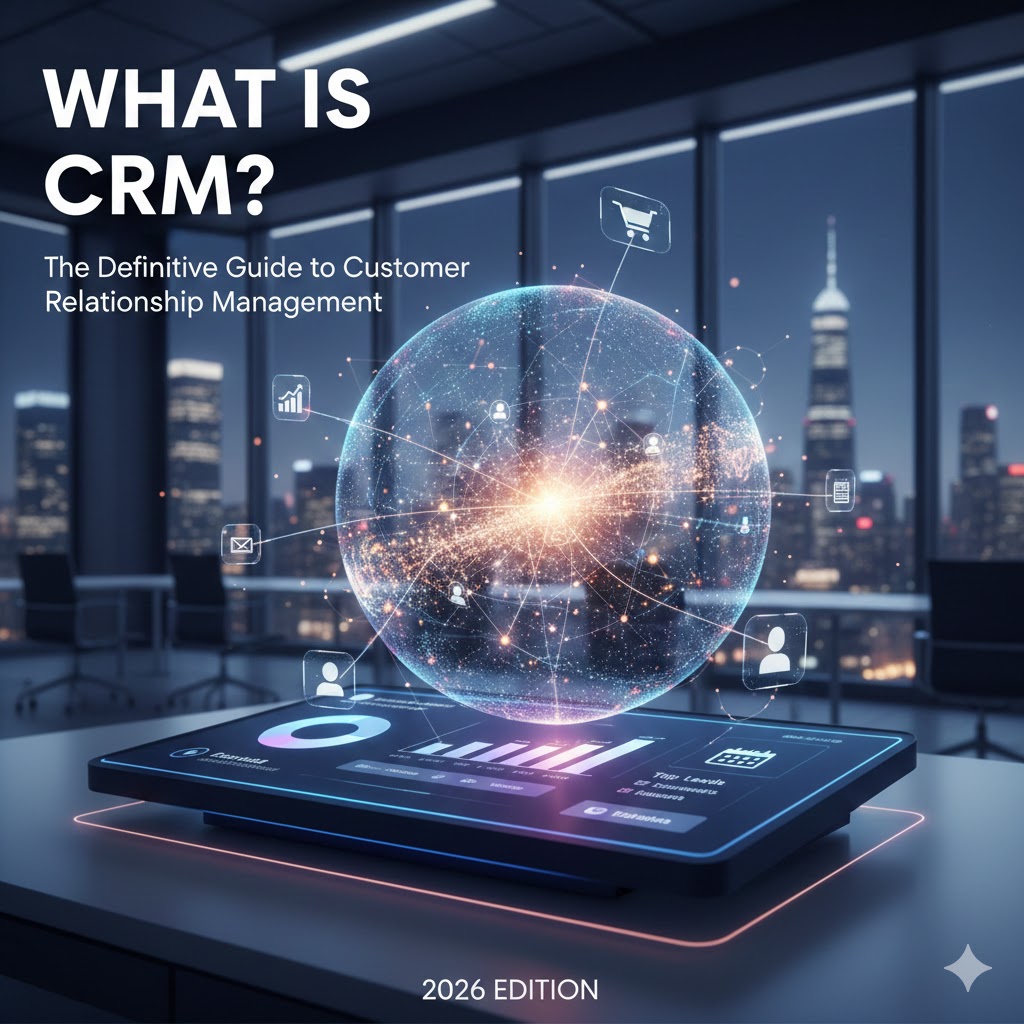
CRM stands for customer relationship management, which is a system for managing all of your company’s interactions with current and potential customers.
The goal is simple: improve relationships to grow your business. CRM technology helps companies stay connected to customers, streamline processes, and improve profitability.
CRM Software: The Heart of Customer-Centric Businesses
When people talk about CRM in practical terms, they’re usually referring to CRM software — an application that collects and organizes customer data from multiple touchpoints, including:
- Sales interactions
- Marketing emails
- Customer support conversations
- Social media engagement
Unlike manual methods like spreadsheets or sticky notes, CRM software provides a single source of truth for customer data. This unified view helps teams make faster, smarter decisions that keep customers satisfied and engaged.
CRM software is used by organizations of all sizes — from startups that need agility to large enterprises with complex operations. No matter the industry, if you communicate with customers, CRM technology can help.
What Are CRM Tools?
CRM tools are the features and capabilities that make CRM software effective. These tools help teams across departments perform their jobs more efficiently and with greater insight. Some of the most valuable CRM tools include:
📌 Contact Management
This tool stores detailed customer and prospect information — like phone numbers, emails, interaction history, and preferences — in one organized place.
📌 Lead and Opportunity Tracking
CRM tools track leads through every stage of the sales pipeline, helping teams identify where prospects are and what actions will move them closer to a sale.
📌 Marketing Automation
By automating repetitive marketing tasks (like email campaigns or social outreach), CRM tools help marketers deliver the right message at the right time.
📌 Analytics and Reporting
CRM systems collect and interpret customer data, providing insights that help teams measure performance, forecast trends, and make data-driven decisions.
📌 Collaboration Features
CRM tools enhance cross-team collaboration by ensuring everyone from sales to service to marketing has access to the same customer information.
Top CRM Software Providers for 2026: A Comparison Table
Choosing the right CRM can be daunting. Here's a brief comparison of leading providers in 2026, highlighting their strengths for different business needs:
| CRM Provider | Best For | Key Strengths in 2026 | Potential Considerations |
|---|---|---|---|
| Salesforce | Enterprise, Large Sales Teams, Complex Needs | Industry-leading AI (Einstein GPT), vast ecosystem, highly customizable, robust analytics, strong for B2B & B2C. | Can be complex and costly for small businesses; requires dedicated admin for full customization. |
| HubSpot | Small to Medium Businesses (SMBs), Marketing | User-friendly, excellent free tier, strong inbound marketing automation, good for sales and service integration. | Less depth for highly complex enterprise requirements; can get pricey with all "Hubs." |
| Zoho CRM | Budget-Conscious, Growing SMBs | Affordable, comprehensive suite (Zoho One), good for email marketing & sales, highly adaptable, strong automation. | UI can feel less modern than competitors; some advanced features require higher-tier plans. |
| Microsoft Dynamics 365 | Microsoft Ecosystem Users, Large Enterprise | Seamless integration with Microsoft products (Office 365, Power BI), strong for B2B, scalable for complex operations. | Learning curve can be steep; best value for businesses already heavily invested in Microsoft. |
| Freshsales (Freshworks) | SMBs, Startups, Sales-focused Teams | Intuitive UI, built-in phone & email, AI lead scoring, competitive pricing, strong focus on sales automation. | Less robust for very large enterprises; some advanced marketing features are add-ons. |
Note: Pricing and feature sets are subject to change. Always verify current offerings directly with the provider.
Why CRM Is Important for Your Business?
Managing customer relationships can be complex. In a typical business, data might be stored in emails, documents, or even team members’ memories. CRM software solves this by centralizing everything in one accessible place dramatically reducing friction and boosting productivity.
Here are some of the key reasons CRM has become essential:
✔ Enhanced Customer Insights
With a complete view of every customer interaction, teams can better understand preferences and behaviors and tailor communications accordingly.
✔ Improved Customer Service
Support teams can access customers’ histories quickly, enabling faster resolutions and higher satisfaction.
✔ Cross-Department Collaboration
Because CRM data is shared across departments, sales, marketing, and service teams can work together more effectively toward shared goals.
✔ Better Forecasting and Reporting
CRM tools provide analytics that help leaders make strategic decisions backed by real data.
✔ Automation of Routine Tasks
CRM software can automate repetitive tasks freeing teams to focus on strategic activities that drive revenue and growth.
How CRM Software Works
At a high level, CRM software works by gathering all customer data into a secure, customizable system that supports every stage of the customer journey. These systems typically operate in the cloud, which means they can be accessed from any device, anywhere, at any time.
Cloud-based CRM offers benefits such as:
- Roaming access from mobile and remote devices
- Lower implementation and maintenance costs
- Seamless updates and integrations with other tools
- Enhanced collaboration and real-time updates across teams
This allows teams in sales, marketing, customer service, and commerce to work with the same data and insights, eliminating silos and helping your business stay competitive.
CRM in Action: Real World Benefits
When implemented effectively, CRM software doesn’t just organize data it drives measurable results. Organizations that use CRM systems often see improvements in:
- Sales revenue and lead conversions
- Customer retention and lifetime value
- Deal closure times
- Internal productivity and coordination
By making customer data actionable, CRM turns raw information into insights that help businesses serve customers better and grow faster.
FAQs
What does CRM stand for?
CRM stands for Customer Relationship Management, a business strategy and technology solution for improving customer relationships.
What is CRM software?
CRM software is a system that helps companies track and manage customer interactions, store customer data, automate tasks, and analyze business performance.
What are CRM tools?
CRM tools are the features inside CRM software that help with contact management, sales pipelines, automation, reporting, and team collaboration.
Why is CRM important for businesses of all sizes?
CRM centralizes customer data, enhances team collaboration, improves customer service, and provides analytics that support better decision-making.
Is CRM only for large enterprises?
No. CRM software is used by small businesses, midsize companies, and large enterprises because it scales with business needs and can be adapted for different workflows.
How does CRM improve sales?
CRM provides a clear view of sales pipelines, automates repetitive processes, and helps teams follow up on leads more efficiently boosting conversion and revenue.
Conclusion
Customer relationship management from understanding the CRM full form to implementing sophisticated CRM software and leveraging powerful CRM tools has become a cornerstone of modern business success.
By centralizing customer data, streamlining collaboration, and automating routine tasks, CRM systems empower businesses to build stronger customer relationships, drive growth, and stay competitive in an increasingly connected world.